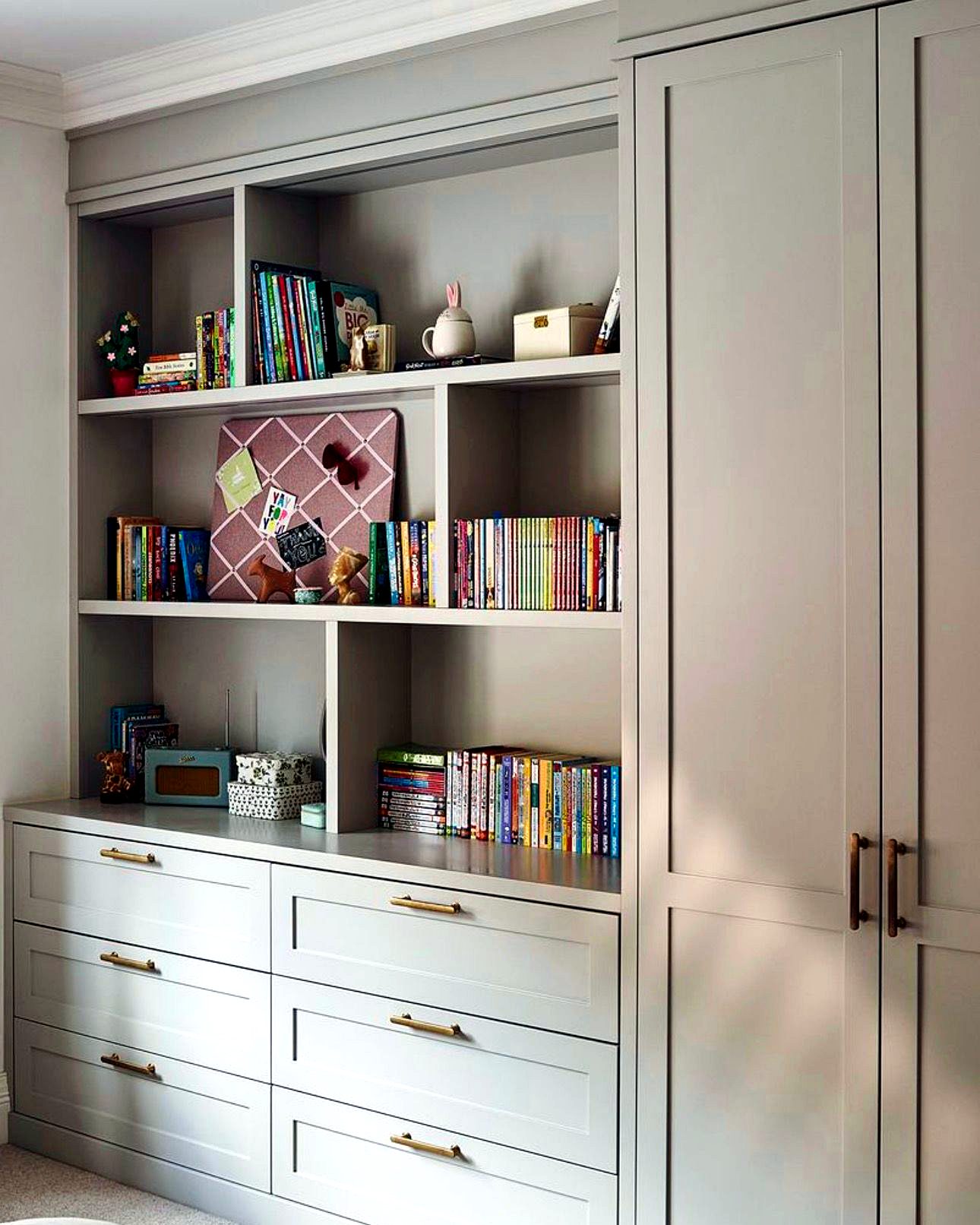
We manufacture fitted wardrobes, so you should read what follows knowing that. What we have tried to do is set out the genuine trade-offs, including the cases where we would tell a client not to bother.
The honest summary
Fitted wins on storage capacity, awkward rooms and visual coherence. Freestanding wins on flexibility, upfront cost and portability. The deciding question is usually not aesthetic — it is how long you expect to live in the house and how regular the room is.
Where fitted genuinely wins
Usable storage per square metre
This is the strongest argument and it is not marketing. A freestanding wardrobe leaves dead space above it, gaps at either side, and a void behind it against uneven walls. A fitted wardrobe uses full floor-to-ceiling height and the full depth available. In a typical double bedroom that difference is around 20–30% more hanging and shelving — in the same footprint.
Awkward rooms
Sloped ceilings, chimney breasts, alcoves, bay windows, box rooms over a stairwell. Standard wardrobes simply cannot address these, and the compromise is always visible. Loft and eaves storage is the clearest example: a made-to-measure run follows the roofline and turns unusable space into full-depth cupboards.
Internal design around what you own
Freestanding units come with a fixed ratio of hanging to shelving. Fitted lets you specify it — double hanging where you keep shirts, full-height for dresses and coats, drawer banks where you would otherwise need a chest of drawers taking up separate floor space. If one person's clothes are mostly long and the other's mostly folded, fitted accommodates that; freestanding does not.
The room reads as finished
Scribed to skirting, ceiling and walls, with no gaps and no dust traps. A fitted run looks like part of the house. This matters more in principal bedrooms than most people anticipate.
Where freestanding is the better call
You are renting, or moving within a few years
Fitted wardrobes are fixtures. They stay with the property. If you expect to move inside two or three years, you are paying for storage you will leave behind — and the value uplift on sale rarely equals what you spent.
The room is regular and a standard wardrobe fits well
If you have a flat, square wall of the right width and no ceiling complications, a good freestanding wardrobe can fit neatly with minimal wasted space. In that specific case the capacity advantage of fitted shrinks considerably, and it is harder to justify the cost.
You expect to reconfigure the room
Nurseries becoming bedrooms, guest rooms becoming offices, children swapping rooms. Freestanding furniture moves. Fitted does not, and modifying it later costs more than it did to build.
The budget is genuinely tight
A decent freestanding double wardrobe might be £400–£900. A fitted run in the same bedroom typically starts around £2,500. The fitted version is better value per unit of storage, but the upfront number is what has to be found, and that is a real constraint rather than a failure of imagination.
Cost comparison, roughly
- Freestanding, flat-pack: £200–£600 per double wardrobe
- Freestanding, solid timber: £800–£2,500 per piece
- Fitted, single wall run: £2,500–£6,000 for a standard double bedroom
- Fitted, walk-in or full corner: £6,000–£12,000 with drawers, lighting and specialist internals
Worth noting: a fitted run frequently replaces both a wardrobe and a chest of drawers, which changes the comparison and frees floor area.
Does either add value to the house?
Estate agents generally view good fitted wardrobes positively, especially in principal bedrooms and in homes short on storage. They rarely add a specific figure to a valuation, but they help a room present well and remove a job the buyer would otherwise face. The caveat: good fitted wardrobes. Poorly built or heavily personalised installations can actively count against you, because the buyer prices in removing them.
A middle path worth considering
You do not have to choose for the whole house. Fitting the principal bedroom and the awkward room — the loft, the box room, the one with the chimney breast — while leaving regular guest rooms freestanding is a sensible allocation of budget. That is what a good proportion of our clients actually do.
If you want to see the range of door styles, finishes and internal configurations, our bespoke wardrobes page covers it, and the portfolio shows completed installations including loft and eaves work.
Frequently asked questions
Can fitted wardrobes be removed or taken with you?
They are generally regarded as fixtures and stay with the property when you sell, unless specifically excluded in the contract. They can be removed, but because they are scribed to walls, ceiling and skirting, removal usually damages plaster and the units rarely fit elsewhere without modification.
Do fitted wardrobes work in rooms with sloped ceilings?
Yes — this is one of the strongest cases for them. Units are built to follow the pitch of the roofline, converting space that no standard wardrobe could occupy into full-depth storage. Loft conversions and eaves are among the most common jobs we take on.
How long do fitted wardrobes take to install?
Typically one to three days on site for a standard bedroom run, following a lead time of around four to six weeks from approved drawings. Larger walk-in dressing rooms may take slightly longer on site.